
Genuine vs Aftermarket Screens: We Tested Both on the Same iPhone Models
"Genuine vs aftermarket" gets thrown around a lot. We compared both, side by side, on the same iPhone models, and here's exactly what we saw — display, touch, and how long each actually lasts.
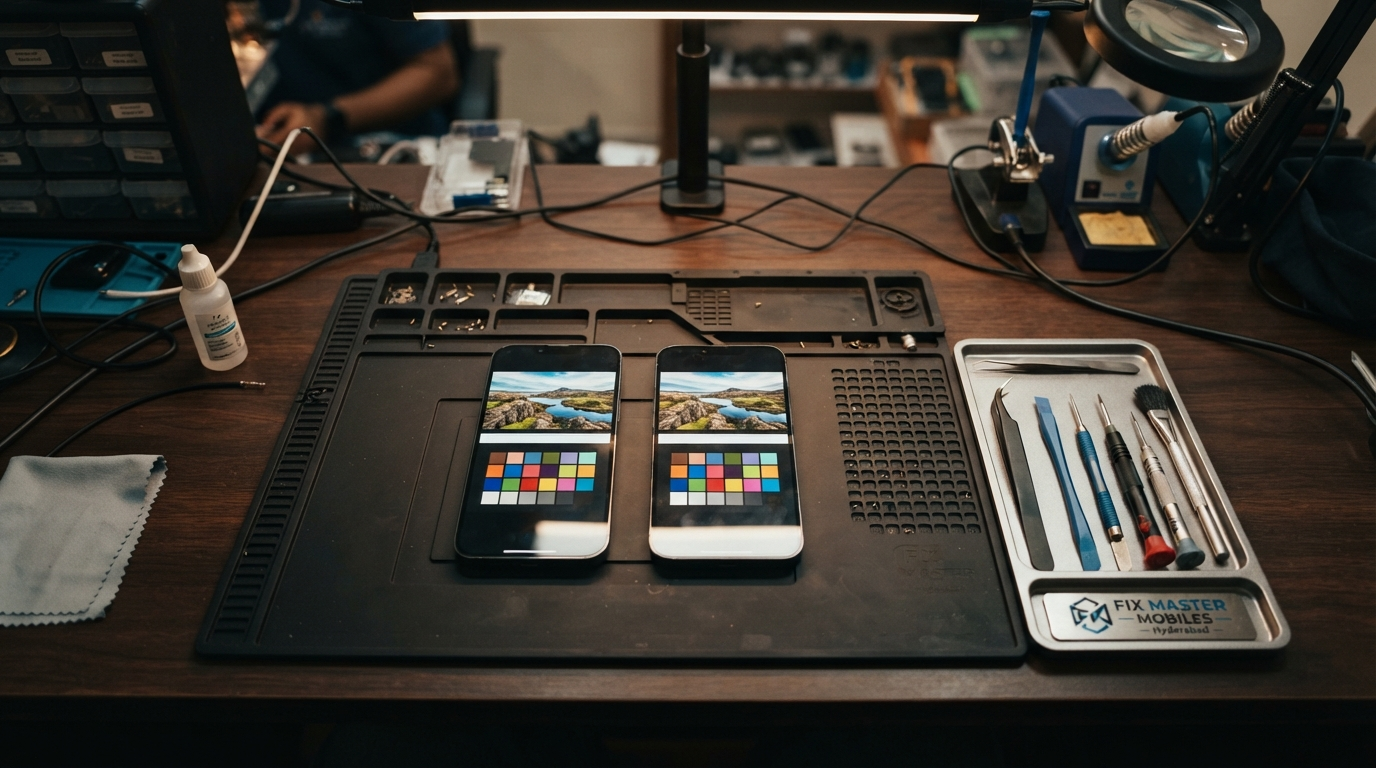
People throw around "genuine vs aftermarket" as a sales line more often than an honest comparison. In fact, every shop claims theirs is the good one. So instead of telling you which is better, we put both on the same iPhone models and looked at what actually changes.
Still, this isn't a certified lab test with instruments. It's what our technicians see, repair after repair, comparing genuine and aftermarket screens on the same devices under normal daily conditions.
How We Compared Genuine and Aftermarket Screens
We compared genuine OEM screens against graded aftermarket screens on the same iPhone models, checking the same things every time. Display color, brightness in daylight, touch accuracy, and how each one holds up after weeks of normal use.
First, both screens went through our standard fitting process. Same technician, same adhesive, same cure time. So the only variable was the panel itself. That matters, because a bad fitting job can make even a genuine screen look faulty. So we wanted to isolate the part, not the process.
We also tracked what came back. Repeat visits, complaints, and failures within the first few months tell you more about a part than day-one impressions ever will.
Display Quality, Touch, and Brightness: What We Actually See
Genuine screens match the phone's factory color and brightness exactly, while good aftermarket screens come close but show small differences under close inspection. However, cheap aftermarket screens are where the gap becomes obvious, even to someone who isn't looking for it.
| Feature | Genuine OEM | Good Aftermarket | Cheap Aftermarket |
|---|---|---|---|
| Color accuracy | Matches factory | Slightly cooler whites | Visibly off, often too blue or warm |
| Brightness in sunlight | Full, matches original | Close, minor dimming | Noticeably dimmer |
| Touch accuracy | Consistent | Consistent | Occasional lag or missed touches |
| True Tone | Works normally | Minor flicker sometimes | Often doesn't work at all |
| Face ID | Unaffected | Unaffected | Sometimes needs re-registration |
So the honest middle ground is good-grade aftermarket. In fact, most people can't tell it apart from genuine in daily use. But cheap aftermarket is a different story. You can usually spot it within a week, once the customer notices the whites look slightly grey.
Real Failure Patterns We See With Cheap Aftermarket Screens
Cheap aftermarket screens fail in specific, repeatable ways, and we see the same handful of complaints over and over. Ghost touches. Backlight bleeding at the edges. Colors that shift warmer or cooler over a few months.
For instance, the most common one is touch inconsistency. Still, it doesn't show up as a total failure. Instead, it shows up as the keyboard occasionally missing a letter, or a game not registering a swipe cleanly. Customers usually blame themselves for weeks before realizing it's the screen.
Backlight bleed is the second pattern. A faint glow along one or more edges, especially visible in a dark room. Instead, it's rarely present on day one. Then it tends to appear, once the screen has been through a few heat cycles, which in Hyderabad happens fast.
Adhesive quality matters too. Cheap kits sometimes use weaker adhesive that lifts slightly at a corner after a few months, letting in dust. Still, none of this is dramatic. It's just a slow decline that ends with a customer needing a repeat repair sooner than they should have.
Price Difference and Long-Term Value
Genuine screens cost more upfront, and cheap aftermarket screens cost the least. But the real comparison is total cost, not sticker price. A cheap screen that fails in two months and needs replacing again ends up costing more than paying for genuine once.
So good aftermarket sits in a sensible middle. It costs meaningfully less than genuine and rarely needs a repeat visit. In contrast, cheap aftermarket is where the math falls apart. Save a little now, pay again in a few months, and lose time and a working phone in between.
We'd rather quote you honestly on both options than sell you the cheapest one and see you again in six weeks.
Our Recommendation for Different Needs
If your phone is your daily driver and you rely on Face ID constantly, genuine is worth the extra cost. If you're budget-conscious but still want something that lasts, good-grade aftermarket is a legitimately smart choice, not a downgrade.
We'd only suggest cheap aftermarket for a short-term backup phone you're planning to replace soon anyway. Even then, we'll tell you honestly what to expect, rather than let you assume it's the same as any other option.
Get a Screen That Matches What You Actually Need
Not every phone needs a genuine screen, and not every budget option is a bad choice. What matters is knowing which one you're getting, and why, before you pay for it.
Call or WhatsApp +91 86865 09563, 8:00 AM – 9:00 PM daily, for an honest quote on genuine and aftermarket options for your exact model. We'll arrange doorstep service where it's available, or you can mail your device to our repair address — Cellar 10, Shop No. 1, Hiline Complex, Road No. 12, Banjara Hills, Hyderabad 500034 — and we'll ship it back once it's done. Every screen replacement carries a 6-month warranty, regardless of which grade you choose.